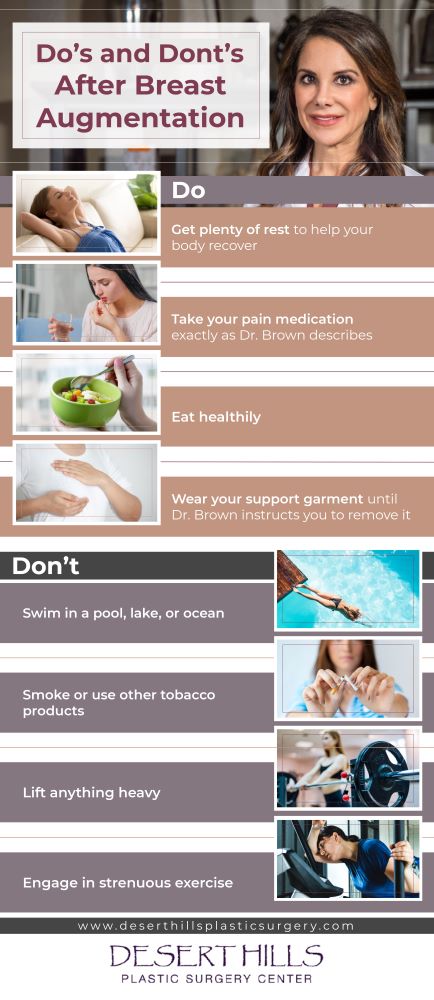
You can expect to feel chest muscle spasms from 3 to 4 weeks into the recovery process. These will occur as the implant is adjusted to your pectoral muscles. These spasms will eventually lessen, though they may be more frequent during the first 6 months. The implant should become more comfortable as you get used to it. You may feel sore and less breastfullness after this procedure.
The symptoms
Normal symptoms after breast augmentation are part of the recovery process. Different women experience different symptoms. In the first few days after the surgery, breasts may appear inflated, discolored, and higher on the chest than the rest. These symptoms can require extra time to heal. These symptoms may indicate an infection if you experience pain or discoloration following a breast augmentation.
Muscle soreness, swelling, and tenderness will persist for at least 3 to 5 day after breast augmentation surgery. The pectoralis muscle connects to the humorous area of the chest, so you may experience chest soreness while moving your arm. Afterward, there may be a burning sensation around the incisions, which will go away with time. Most activities can be resumed within the first few days. Heavy exercise will take longer.
Recovery time
Breast augmentation takes a while to fully recover. The first couple weeks will be the most difficult. Remember to stay positive by reminding yourself of the reasons you decided to have the procedure in the first place. You are working with a team of medical professionals. Your surgeon will be there to assist you at every stage. You're getting a brand new set of breasts.
After your surgery, your surgeon will provide you with instructions about how to clean your newly enhanced breasts. Prescription pain relievers will also be prescribed to prevent infection. For the first week, support bras will be required for 24 hours daily. After that, activities may be restricted for a few weeks. You should arrange for childcare and full-time care for the few days following surgery.
Pain management
You should first understand the risks of breast augmentation. Breast augmentation can cause severe pain, so it is important to plan carefully. Before you have your procedure, discuss with your surgeon the risks and how to manage them. It is crucial to be informed and discuss the recovery period and timeline with your surgeon.
For your healing, your doctor will prescribe pain medication. You should take the prescribed medication as directed. It's a good idea that you try to relieve the pain using over-the–counter pain relievers and ice packs. Prescription pain medication is also an option. Your surgeon may recommend the lowest dose pain medication. You should also make an appointment with your surgeon to review your progress after breast augmentation.
Scar tissue
There are many methods to reduce scarring after breast augmentation surgery. Scarring can be reduced using silicone sheeting or bandages. Gel is also an option. Cortisone cream is a good option to reduce the scarring and soften it. Pressure bandages are another option for flattening scars. However, these techniques must be used consistently and may take many months to achieve results.
Breast augmentation surgery can cause tightening of the skin. Scar tissue can also lead to tightening around implants. If the implant is too firm or not settling properly, this can occur. Sometimes, the scar may be so tight it starts near the incision. If it persists, or is clearly visible, this could indicate scar tissue development. If tightness occurs after breast augmentation, it is important to feel the implant.